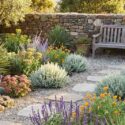
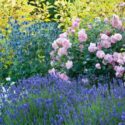
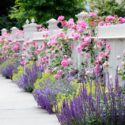
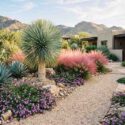
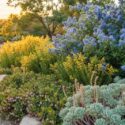
This gravel path garden pairs English lavender blooming in late spring and summer with silver lamb's ears foliage and airy feather grass. The result is a drought-tolerant, pollinator-friendly border that blends fragrance, texture, and movement for a calm, Mediterranean-inspired landscape.
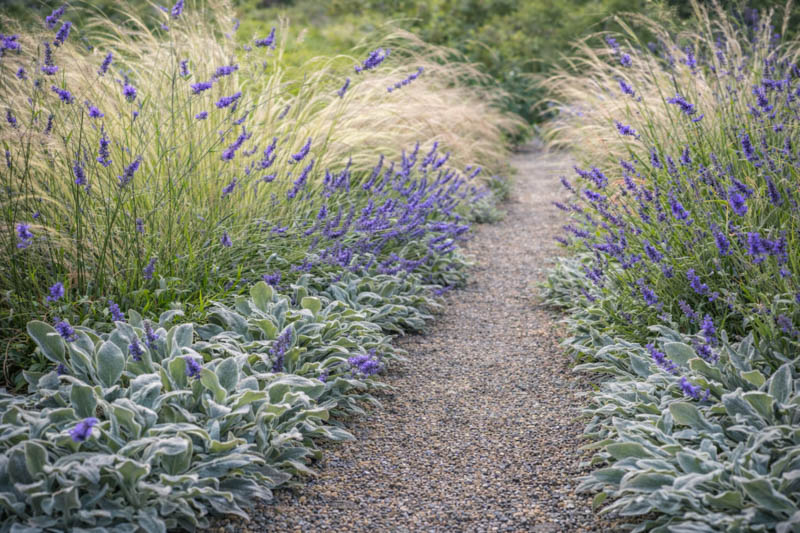


This simple gravel border relies on just three plants: lavender, lamb’s ear, and Mexican feather grass. The palette is restrained—purple flowers, silver foliage, and fine green-to-golden grass—but the differences in texture keep the planting from feeling flat.
Lavender provides the strongest flower color and much of the structure. Lamb’s ear stays lower and softens the edge of the path, while feather grass adds a finer texture and noticeable movement. Gravel between the plants keeps the border open and helps each clump retain its shape.
The effect suits sunny, dry sites particularly well. Once established, all three plants are better adapted to relatively lean, free-draining conditions than to rich, wet soil.
Main plants used: Lavandula angustifolia, Stachys byzantina (Lamb’s Ear), and Nassella tenuissima (Mexican Feather Grass)
The planting succeeds because each plant has a noticeably different form. Lavender grows in rounded woody mounds topped by upright flower spikes. Lamb’s ear forms low mats of broad, felted leaves. Feather grass is much finer, with narrow leaves and seedheads that move easily in the wind.
Those differences are especially clear against gravel. Instead of covering every inch of soil, the planting leaves open space between groups, making the silver foliage and grass texture easier to see.
The limited color palette also helps. Purple and silver repeat through the border, while the grass introduces softer green and straw tones as the season progresses.
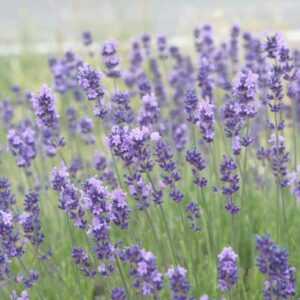
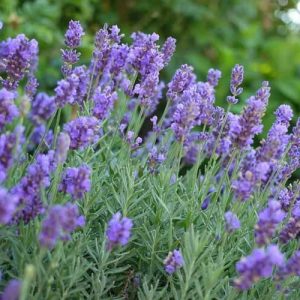
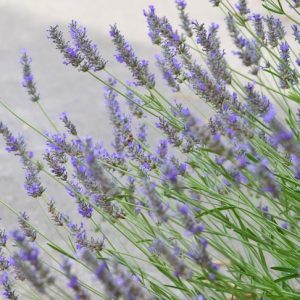
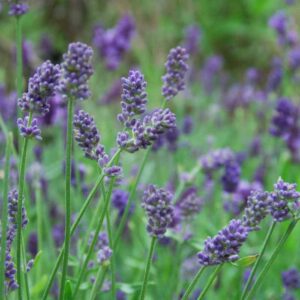
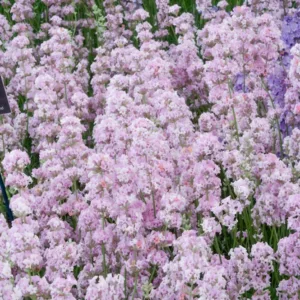
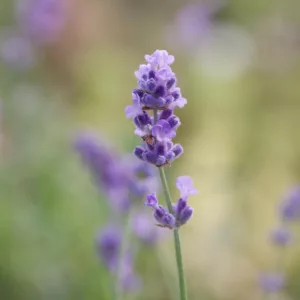
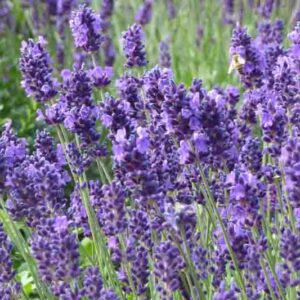
Lavandula angustifolia provides most of the flower color and fragrance. Use it in repeated groups along the path rather than as a perfectly continuous hedge. Good drainage is essential, especially in winter, and plants tend to remain more compact in leaner soil.
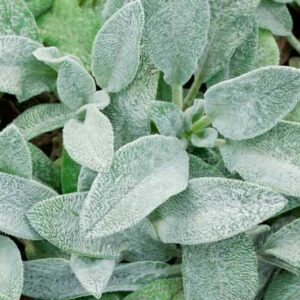
Stachys byzantina works well at the front where its silver leaves can spread toward the gravel. Allow it to form irregular patches rather than trimming it into a hard edge. In humid or poorly drained conditions, avoid keeping the foliage constantly wet.
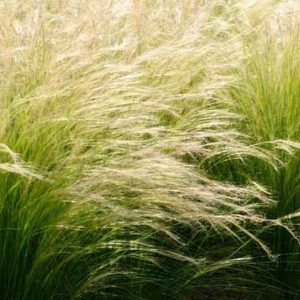
Nassella tenuissima adds the finest texture in the planting. Small repeated groups are usually enough to introduce movement without overwhelming the lavender and lamb’s ear. It performs best in open, sunny conditions with well-drained soil.
Important note: Mexican feather grass can self-seed aggressively and is considered invasive or restricted in some regions, including parts of the western United States. Check local guidance before planting it. Where it is unsuitable, choose a non-invasive fine-textured grass adapted to your region.
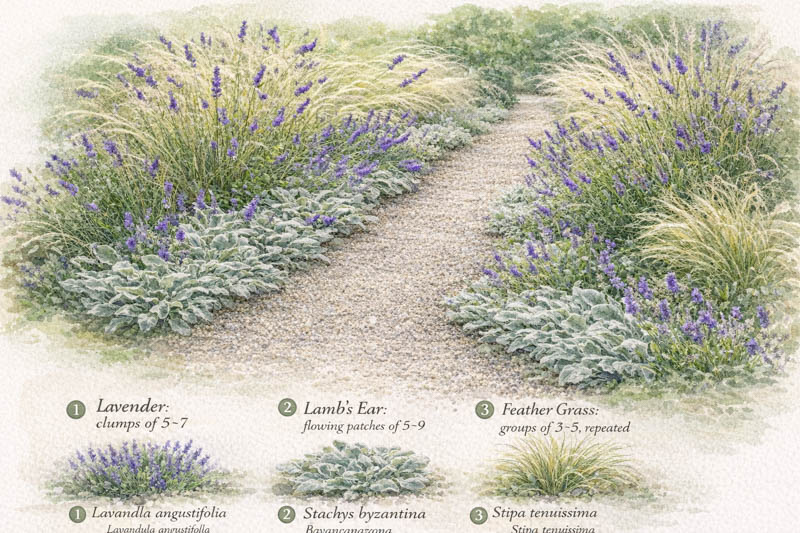
Create a sunny gravel border with fragrant flowers, silver foliage, and enough grass movement to keep the planting light rather than static.
Use these proportions as a guide only. The final balance should depend on mature spread and how much open gravel you want to retain.
Place the lavender first in repeated groups, leaving gaps rather than forming one uninterrupted line.
Use lamb’s ear closer to the path, allowing some foliage to soften the gravel edge without covering it completely.
Add feather grass between and behind the broader plants, where its fine leaves and seedheads can move freely.
Keep some gravel visible throughout the border. The open space is part of the design, not an area that needs to be filled.
These plants prefer drainage over fertility. Rich soil and frequent irrigation can produce softer growth and shorten the useful life of lavender, while wet conditions can cause problems for lamb’s ear.
Browsing by deer and rabbits is often limited because of the aromatic or woolly foliage, but resistance is never absolute. Local browsing pressure can change from year to year.
The biggest practical consideration is Mexican feather grass. Its graceful appearance is useful in design, but its invasive potential means it should not be planted where local authorities or horticultural guidance advise against it. In those areas, substitute a regionally appropriate non-invasive grass with a similarly fine texture.
| Hardiness |
7 - 8 |
|---|---|
| Heat Zones |
7 - 8 |
| Climate Zones | 2B, 3, 3A, 3B, 4, 5, 6, 7, 8, 9, 10, 11, 12, 13, 14, 15, 16, 17, 18, 19, 20, 21, 22, 23, 24 |
| Exposure | Full Sun |
| Season of Interest | Spring (Late), Summer (Early, Mid) |
| Maintenance | Low |
| Water Needs | Low |
| Soil Type | Loam, Sand |
| Soil pH | Acid, Alkaline, Neutral |
| Soil Drainage | Well-Drained |
| Characteristics | Showy, Cut Flowers, Dried Arrangements |
| Tolerances | Drought, Deer, Rabbit, Dry Soil, Rocky Soil |
| Attracts | Bees, Butterflies |
| Landscaping Ideas | Beds And Borders, Pathways |
| Garden Styles | Butterfly Garden, Gravel and Rock Garden, Informal and Cottage, Pollinator Garden |

| Hardiness |
7 - 8 |
|---|---|
| Heat Zones |
7 - 8 |
| Climate Zones | 2B, 3, 3A, 3B, 4, 5, 6, 7, 8, 9, 10, 11, 12, 13, 14, 15, 16, 17, 18, 19, 20, 21, 22, 23, 24 |
| Exposure | Full Sun |
| Season of Interest | Spring (Late), Summer (Early, Mid) |
| Maintenance | Low |
| Water Needs | Low |
| Soil Type | Loam, Sand |
| Soil pH | Acid, Alkaline, Neutral |
| Soil Drainage | Well-Drained |
| Characteristics | Showy, Cut Flowers, Dried Arrangements |
| Tolerances | Drought, Deer, Rabbit, Dry Soil, Rocky Soil |
| Attracts | Bees, Butterflies |
| Landscaping Ideas | Beds And Borders, Pathways |
| Garden Styles | Butterfly Garden, Gravel and Rock Garden, Informal and Cottage, Pollinator Garden |
Recreate this garden. Specify the percentages you would like to have of each plant and input the dimensions of your garden space.We'll give you a shopping list so you know how many plants you need.
| Plant | Quantity | |
|---|---|---|
| Lavandula angustifolia 'Hidcote' (Lavender) | N/A | Buy Plants |
| Stipa tenuissima (Mexican Feather Grass) | N/A | Buy Plants |
| Stachys byzantina (Lamb's Ear) | N/A | Buy Plants |
Create a membership account to save your garden designs and to view them on any device.
Becoming a contributing member of Gardenia is easy and can be done in just a few minutes. If you provide us with your name, email address and the payment of a modest $25 annual membership fee, you will become a full member, enabling you to design and save up to 25 of your garden design ideas.
Join now and start creating your dream garden!
Create a membership account to save your garden designs and to view them on any device.
Becoming a contributing member of Gardenia is easy and can be done in just a few minutes. If you provide us with your name, email address and the payment of a modest $25 annual membership fee, you will become a full member, enabling you to design and save up to 25 of your garden design ideas.
Join now and start creating your dream garden!